
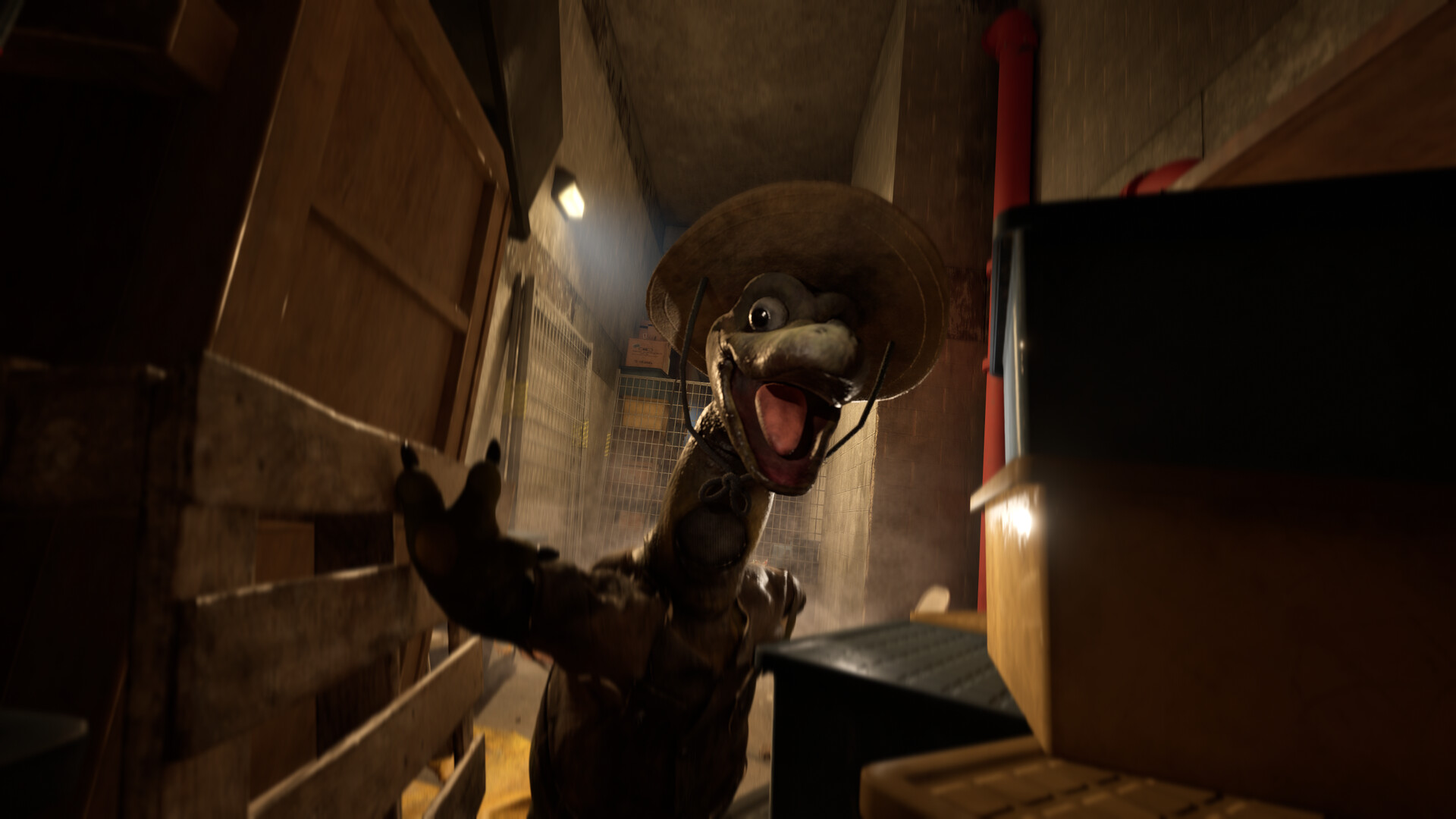
Official screenshot · Steam media gallery · © WDR Studios / Digital Pajamas / Behaviour Interactive. Material statement.
The principal dinosaur threats
The developer Q&A corroborates the main dinosaur choices as Brontosaurus, Allosaurus and Dilophosaurus. The Dilophosaurus is described as a human-dinosaur Hybrid. These are the supported names to use when introducing the game’s principal monsters.
The word “principal” matters because it describes the focus of the developer’s discussion. It does not claim an exhaustive count of all hostile entities. A roster should not turn a production summary into a promise that no other threats exist.
What the creature devlog establishes
The Creature Design devlog separately discusses the Hybrid, Bronto and Allo. That gives the named trio a second official written reference. It also shows that creature design is an intentional part of the game’s horror identity.
The article concerns how the creatures were created, rather than a map of where they spawn. It does not provide measured detection distances or pursuit-speed values. Those behavioral properties require a different kind of evidence from the design descriptions used here.
Mascots are not automatically enemies
The same development material discusses wearable mascot suits. The Q&A also names Paleo Pal mascots separately from the principal dinosaur choices. These references establish attraction-related designs without making every mascot a distinct hostile species.
A recognizable costume can be part of the setting and visual identity. Its existence alone does not establish an enemy encounter. Keep mascot names and monster identities separate unless a source directly connects a particular one to hostile behavior.
Fossil displays serve another role
The setting is a dinosaur attraction, so dinosaur imagery is not limited to living threats. Museum exhibits and skeleton displays should be identified as displays when that is what the source describes. Counting them together with pursuing creatures would make the enemy list misleading.
The Dilophosaurus research provides a clear example of the distinction. A credited skeleton asset and the fictional Hybrid can share a dinosaur reference while serving different purposes. The species name alone is not enough to determine whether something is an enemy.
What a useful enemy guide should separate
Creature identity, appearance and behavior are different questions. The official material collected here answers principal identity and design. It does not establish every location, spawn condition, sensory rule or escape route.
This overview therefore groups the confirmed threats and explains the surrounding categories. It avoids a numerical completion claim that the sources do not support. For the main-trio question phrased as bosses, use the boss overview; for the Hybrid’s visual development, use the Dilophosaurus guide.
Sources & article scope
Research checked October 27, 2026. Confirmed principal creatures · No exhaustive enemy count or spawn map. Send a correction.